
Why Dry Eye Can Blur Vision Even With Updated Glasses

Why Dry Eye Can Blur Vision Even With Updated Glasses
You’re reading an email through your new glasses when the words start to blur. A blink brings the letters back into focus, but a few lines later it happens again. When patients describe this pattern at our Houston office, we check the tear film as well as the glasses prescription. Dry eye can make vision fluctuate even when the lens strength is right.
Why a Blink Can Clear Your Vision
Each time you blink, your eyelids spread a thin layer of tears across the cornea, the clear front surface of your eye. That layer gives light a smooth surface to pass through. If your eyes make too few tears or your tears evaporate too quickly, dry patches can form between blinks. Light scatters across those uneven areas, making the edges of letters look fuzzy.
Your glasses help focus light, but their lens power stays the same while your tear film changes. A full blink can smooth the surface again. That’s why the same line of text can look sharp one moment and blurry the next.
When the Blur Is Most Noticeable
Pay attention to what you’re doing when your vision changes. A few observations can help us narrow down the cause.
During screen time, you may blink less often and notice that text gets harder to read.
In the car, air from a dashboard vent blowing toward your eyes can make tears evaporate faster.
By evening, you may notice burning, a gritty feeling, or watering along with the blur.
What We Check During Your Visit
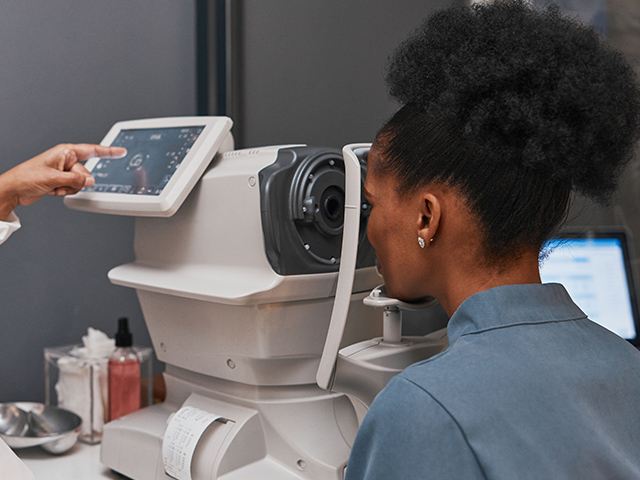
Bring your current glasses and tell us whether the blur affects one eye or both. We can check the lenses and your prescription, examine the surface of your eyes, and see how long your tears stay evenly spread after a blink. We may also look at the oil glands along your eyelids. The oil they release helps slow tear evaporation.
What we find guides treatment. For example, we may recommend lubricating drops if you need more moisture or a warm compress if thickened oil is blocking the eyelid glands. A sudden loss of vision or severe eye pain needs immediate medical attention.
If you keep blinking to bring words back into focus, call Vision Source Copperfield in Houston, TX, at (281) 859-8000 to schedule an eye exam.
Quick Links
Helpful Articles
All Eye Care Services
Find personalized eye care excellence with our comprehensive services. From eye exams to advanced diagnostics, trust us for all your vision needs.

Keep In Touch
For non-urgent questions or to learn more about our services, contact us today!
© 2026 Vision Source Copperfield. All rights Reserved - Accessibility Statement - Privacy Policy - Sitemap
Managed and Designed by 